


Sydney's Lost Structures
Taking seven years to build between 1944 and 1951, the crane was at the time the largest crane in the Southern Hemisphere. It was specifically erected for the removal of twin 18-inch gun turrets from the English battleships of the period, hence their locations at Royal Navy home ports. It was also used to lift warship engines, boilers, and guns of up to 250 tons.
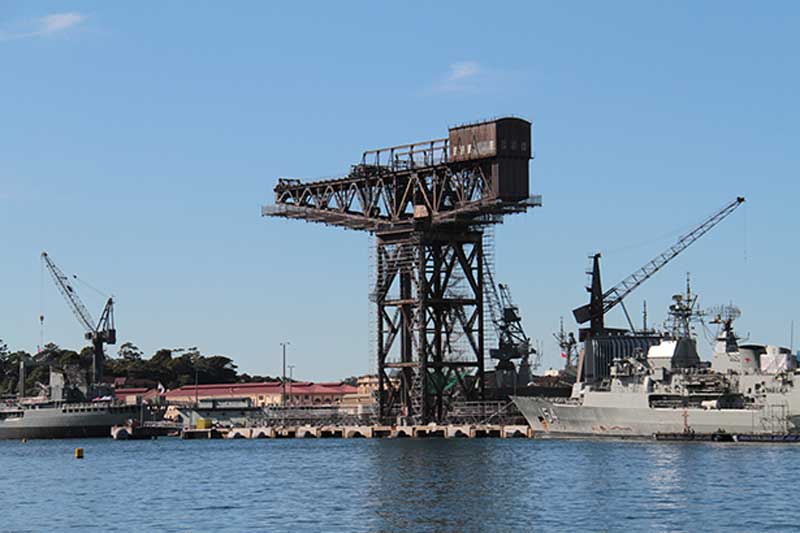
The Sydney Steel Company Pty Ltd was contracted to fabricate and erect the crane to the design of Sir William Arrol, with Sir Alexander Gibb and Partners as consultants. All mechanical and electrical equipment came from England. All structural steelwork was fabricated and erected by the Sydney Steel Company. In August 2013 the Federal Government announced the removal of the hammerhead crane, that has been a landmark of Garden Island Naval Base for 60 years, at an estimated cost of $10.3 million. Before its deconstruction, it was one of only 15 still standing around the world, and one of a series of cranes built around the world to service the British Navy fleet. The crane has not been used since 1996.
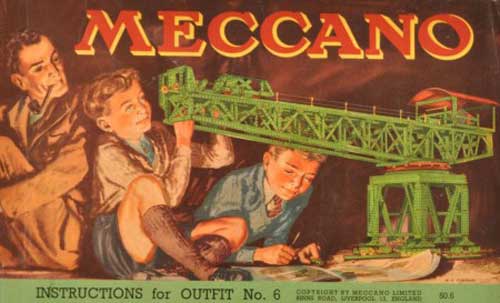
To generations of Meccano builders the crane had great meaning. It embodies exactly what the construction toy, Meccano, was trying to emulate. The crane itself is very similar to the large and impressive Meccano model, the giant block-setting crane, which from 1934 until 1957 featured on the manual covers and instruction books of all Meccano sets. It was the symbol of the most advanced model which could be made with Meccano, the construction toy invented by Frank Hornby in 1901 and made in Liverpool, England. Regardless of the size of the set, the crane was what every boy of that era aspired to build.

The proposal for a Spit Bridge was first suggested in 1861, then in 1888 and again in 1915. However, it was not until 1923 that the proposal was seriously considered and a bridge was erected. In 1923, the NSW State Government passed the necessary legislation and authority was given to the Sydney Harbour Trust to design and construct a bridge across Middle Harbour on behalf of Manly Council. Manly Council raised the required money and was given permission to be reimbursed from the collection of tolls after the bridge was built. By 1930 the bridge was paid for, the toll was abolished and control of the bridge was transferred to the Department of Main Roads the same year.
This bridge was a low-level opening timber bridge and cost £60,000 to construct. Designed as a temporary bridge it was expected that it would be replaced with a high-level bridge within 20 years. On 5 May 1924 the first pile was ceremoniously driven by the Mayor of Manly, Ald. A.C. Samuels. The bridge was completed and officially opened on 23 December 1924. During the first five days of operation 16,451 vehicles crossed the bridge. The bill for a passenger on a bicycle was one penny and a car cost sixpence. By the 1950s the bridge was no longer adequate as vehicles would queue for over an hour to cross so it was decided to build a new one. It was finally completed and opened in November 1958 for a total cost of £1,110,000.
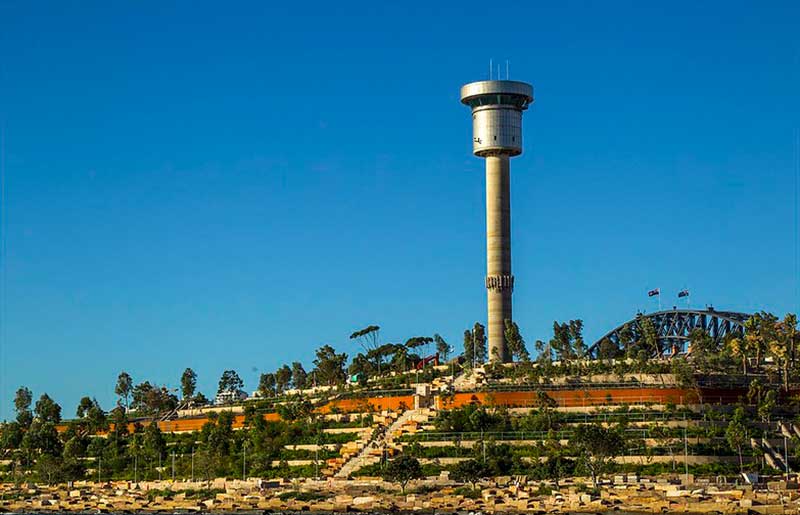
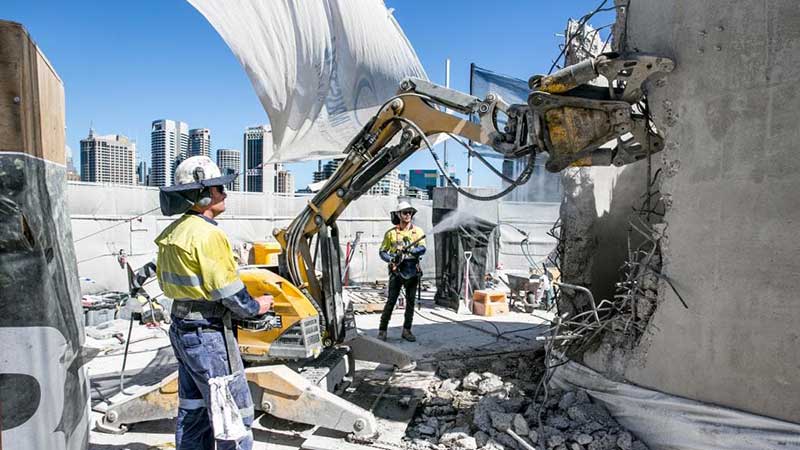
The 87m high Sydney Ports’ harbour control tower was built in 1974 and nicknamed “the pill” when it controlled all the berths along the city’s waterways. Plans for the tower were drawn up in 1972 after two ships collided in the shipping channel near Millers Point. The 87-metre high tower consisted of a reinforced concrete column topped by a stainless steel and glass observation and operations room. It stood watch over Sydney Harbour from 1974-2011 to enable a 24-hour a day supervision of shipping movements. As technology advanced and commercial shipping in Sydney Harbour dwindled, it was no longer necessary to have sightlines on the harbour 24 hours a day. The tower became redundant in 2011, when vessel control services were transferred to Port Botany.
The base of the tower stood in the Cutaway, a huge underground cultural space under the headland, and rose through a void above Barangaroo headland park. The removal of the tower in 2017 was part of the overall vision for Barangaroo Reserve, which is to restore a naturalistic look for the headland following a century of industrial use. The demolition took place in spite of public opposition. Described as "the last remnant of maritime Sydney", it was in good condition and earned the government $100,000 in rent from the transmission towers mounted on it, and could have been used as a lookout tower for visitors to Barangaroo.