

Edgecliff
Location: Eastern SuburbsLocated 4 kilometres east of the Sydney central business district, Edgecliff is surrounded by the suburbs of Double Bay, Woollahra, Paddington, Rushcutters Bay and Darling Point. As none of those localities have a railway station but Edgecliff does (it also has a bus interchange), Edgecliff is the perfect stepping off point to explore any or all of them if you are if you are reliant on public transport to get around.
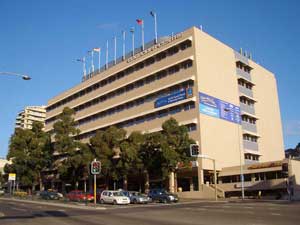
The Edgecliff Centre on New South Head Road is a commercial hub with retail space close to the transport services and office space above. The Edgecliff Eastpoint shopping centre sits above Edgecliff railway station, which is on the Eastern Suburbs railway line, and below the bus interchange.
Click on or tap an attraction to read the description. Click or tap again to hide the description.

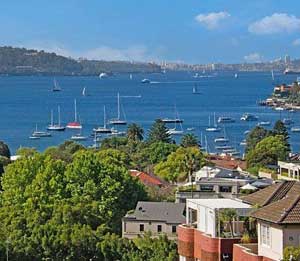
Double Bay is a relatively exclusive harbourside eastern suburb, with one of Sydney's prettiest harbourside shopping villages. Tagged by many as Sydney's "little Europe", the suburb boasts elegant streets, fine fashion boutiques, a vibrant cafe society and upmarket real estate featuring grand residential homes. Double Bay's shopping precinct is one of the most fashionable and expensive in Sydney, and bears more than a passing resemblance to Bevery Hills' Rodeo Drive.
The heart of Double Bay is less that a kilometre's walk from Edgecliff. When exiting the Edgecliff Centre on New South Head Road, turn right and New South Head Road down the hill to Double Bay. The major shopping area is centred around New South Head Road and Bay Street. To reach the harbour, conrtinue along Bay Street, which ends at Double Bay Wharf - is a great spot to take photos of the harbour.

The harbourside suburb of Darling Point is renowned for its desirable and expensive real estate. It is mostly residential and regarded as one of the most exclusive and prestigious suburbs in Australia, where such Australian luminaries as Gough Whitlam, Nicole Kidman (whilst married to Tom Cruise), Helen Reddy, aviator Charles Kingsford Smith, Lara Bingle, Rachel Griffiths, newsreader Sandy Sully and Ita Buttrose have called it home.
Darling Point has more than its fair share of historic mansions, and most can be accessed by taking a walk along Darling Point Road. When exiting the Edgecliff Centre on New South Head Road, turn left, and at the first set of traffic lights is Darling Point Road. St Mark's Anglican Church in Darling Point Road was designed by Edmund Blacket in 1852 and is now a popular wedding venue. It has hosted weddings such as Elton John's first marriage and the fictional wedding in the film Muriel's Wedding. Follow Darling Point Road to te end and you will come to McKell Park on the harbour. McKell Park was originally the site of the now-demolished Canonbury House, but is now a public park. Situated at the northern end of Darling Point Road, it has panoramic views of Sydney Harbour and is a popular location for picnics and weddings. It also provides access to Darling Point's ferry stop, which is nearby. McKell Park is a 25 minute (1.6km) walk from Edgecliff Centre.

Elizabeth Bay is another small but picturesque harbourside suburb which can be easily reached on foot from Edgecliff. A suggested walk is to follow New South Head Road back towards the city centre. At the bottom of the hill is Rushcutters Bay Park, on the harbour. Overlooking the northern end of the park is Elizabeth Bay. Take any of the streets at the northern end and you'll soon end up on Darlinghurst Road. Turn left and within a min ute or two you will be in the heart of Kings Cross. The walk from Edgecliff will take 20 to 40 minutes, depending on which streets you take when exiting Rushcutters Bay Park. You can either walk back to Edgecliff, or continue on Darlinghurst Road to King Cross station, also on the Eastern Suburbs railway line.
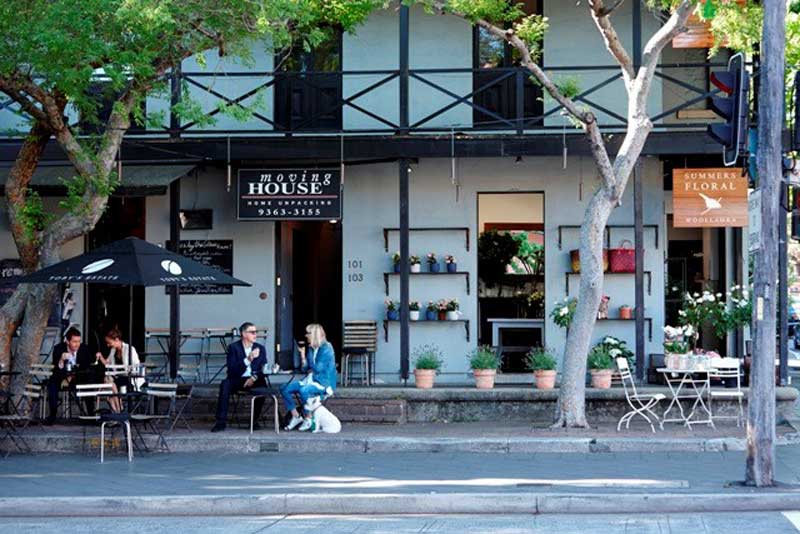
The neighbouring suburb of Woollhara is famous for its quiet, tree-lined residential streets and village-style shopping centre. Woollahra is an extremely affluent suburb, due in part to its proximity to the city and the shopping centre at Bondi Junction, plus a wide range of picturesque homes, mostly in various Victorian styles. Moncur Street and Queen Street are particularly affluent areas, with a mixture of residential and commercial buildings and an extraordinarily high number of heritage-listed buildings. High-rise development has been avoided, maintaining the heritage character of the suburb.
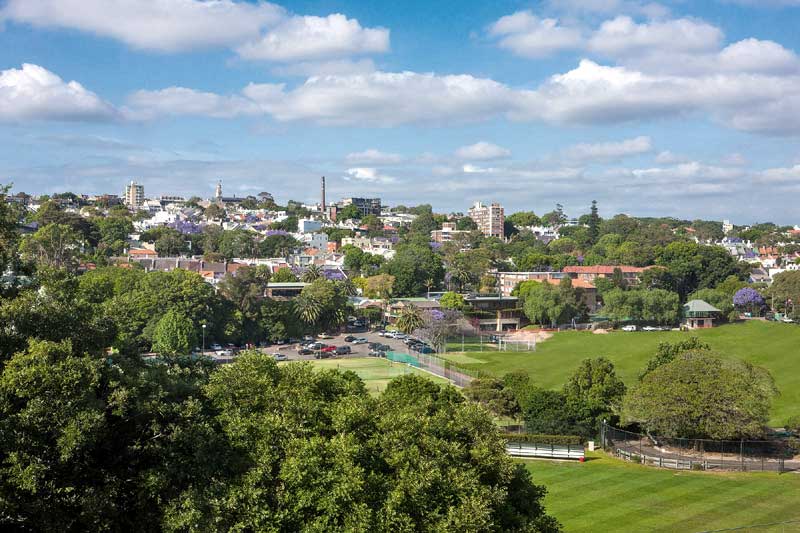
When exiting the Edgecliff Centre on New South Head Road, turn right, then immediately right at the traffic lights into Ocean Street which leads to into the heart of Woolhara. The Queens Street shopping precinct is a 17 minute (1.3km) walk from Edgecliff Centre. A suggested return walk is through Trumper Park. At the corner of Queen and Moncur Street, take Moncur Street north, veering right into Jersey Road. Turn left into Harris Street and you will see the entrance to Trumper Park in front of you. Walk through the park to Trumper Oval, exiting via the path which leads to New McLean Street at the back of the Edgecliff Centre.
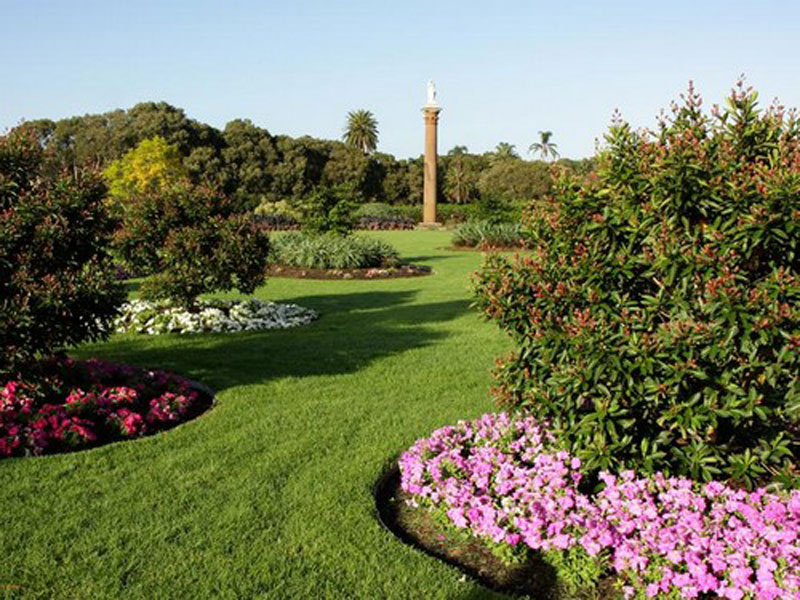
The largest parklands in Sydney's inner suburbs, Centennial Park is an ideal place to relax and enjoy some time out. Edgecliff is the clost railway station to Centennial Park, and the 22 minute (1.6 km) walk is easy. When exiting the Edgecliff Centre on New South Head Road, turn right, then immediately right at the traffic lights into Ocean Street. Follow it to the end and the entrance to Centennial Park is on the opposite side of Oxford Street in front of you.
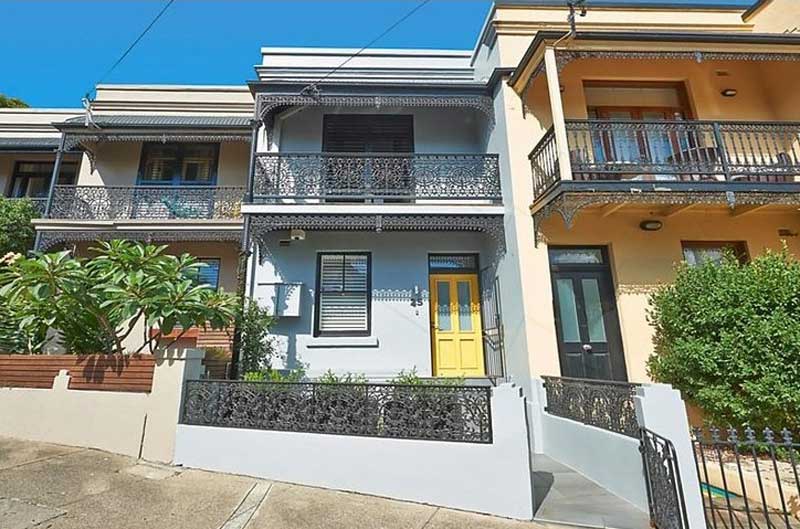
Often colloquially referred to as "Paddo", Paddington is a rare and largely intact example of an early Victorian residential suburb. Its unique qualities may be attributed to its close proximity to the city, the topography of its harbour location, the process of development and subdivision of early land grants. The heritage conservation status of Paddington its streets and houses, its rooms and details is recognised as being of National and State significance.
Oxford Street is a one kilometre long shopping strip extending unbroken the length of Paddington, at least on the north side of the street. While there is a range of speciality shops and cafes, it is the plethora of clothing boutiques that has put Oxford Street on the tourist map. Five Ways offers a wide range of eateries with al fresco dining. In the leafy back streets the numerous hotels are matched by the proliferation of galleries, interior design, antique dealers and restaurants.
From New MacLean Street, at rear of the Edgecliff Centre, take the path down into Trumper Park. Walk in around Trumper Oval to the corner of Cascade Street and Glenmore Road. Take the latter, walking uphill to Five Ways. At this intersection, Heeley Street will take you to the centre of Paddington's Oxford Street shopping precinct. Paddington Reservoir Gardens, Allianz, the Sydney Cricket Ground and Victoria Barracks are all in the vicinity. Paddington Town Hall, on Oxford Street, is 20 minutes (1.4 km) walk from Edgecliff Centre via this route.
Edgecliff takes its name from its location because it literally sits on the edge of a cliff. The rocky cliff was extensively quarried in the early day of European settlement.
The area was dominated for some time by the Glenrock property, on the north side of New South Head Road. Sir Edward Knox built Fiona in 1864 after having it designed by J. F. Hilly. It has been described as "a Classical Revival two-storey mansion" and was made of sandstone. Other elements of the estate included Glenrock, an Italianate residence designed by David MacBeath and built by John Marks circa 1870. There were also substantial gates of wrought iron and sandstone. The building was demolished when New South Head Road was widened, but the gates survived. Also on the estate was the Dower House, a Victorian Gothic Revival house of sandstone, built some time after 1842 by Whistler Smith. The estate is now the site of Ascham School, and the above items are on the National Estate.
In September 1894 a cable tram service opened, which operated from King Street in the city to Ocean Street in Edgecliff. The powerhouse driving it was located at Rushcutters Bay. Unlike other trams of the era which were driven by steam, the cable ran in a gutter between the tracks. The cars gripped the moving cable to advance and released it to stop. It operated until 1905 when the tram line was electrified. Edgecliff railway station opened in 1979, when the South Coast and Eastern Suburbs line was extended from Town Hall railway station to Bondi Junction.
The area was dominated for some time by the Glenrock property, on the north side of New South Head Road. Sir Edward Knox built Fiona in 1864 after having it designed by J. F. Hilly. It has been described as "a Classical Revival two-storey mansion" and was made of sandstone. Other elements of the estate included Glenrock, an Italianate residence designed by David MacBeath and built by John Marks circa 1870. There were also substantial gates of wrought iron and sandstone. The building was demolished when New South Head Road was widened, but the gates survived. Also on the estate was the Dower House, a Victorian Gothic Revival house of sandstone, built some time after 1842 by Whistler Smith. The estate is now the site of Ascham School, and the above items are on the National Estate.
In September 1894 a cable tram service opened, which operated from King Street in the city to Ocean Street in Edgecliff. The powerhouse driving it was located at Rushcutters Bay. Unlike other trams of the era which were driven by steam, the cable ran in a gutter between the tracks. The cars gripped the moving cable to advance and released it to stop. It operated until 1905 when the tram line was electrified. Edgecliff railway station opened in 1979, when the South Coast and Eastern Suburbs line was extended from Town Hall railway station to Bondi Junction.